Showing posts with label DotNXT Unfolded. Show all posts

Tuesday, March 3, 2026

The Unwaking: When the Shield Between Worlds Shatters

The piercing white light of the room was a physical assault, a jarring slap after years of forest green and...

The piercing white light of the room was a physical assault, a jarring slap after years of forest green and twilight blue. His eyelids peeled open, sticky and reluctant, to a sterile, beeping world utterly alien. The air smelled of disinfectant and something metallic, like old coins left in the rain. Then the voices started—a cacophony of hushed urgency—and a hand reached for him. Too pale. Too soft. Panic seized him, raw and ancient, and an invisible force surged from his core.

At DotNXT let's Unfold the story of Kael, a man who built a life among spells and shadows, only to discover his truest reality might be the one he fought to escape.

The scent of damp earth and woodsmoke filled his senses as he leaned in, breathless
Fantasy/Fiction
Kael awoke from a 43-year coma to a sterile hospital, only to cast a magical shield that *worked*—deflecting reality itself. Was his life in Eldoria a simulation, or is Neo-London the true illusion? A mind-bending tale of magic, memory, and the fragile boundaries of existence.

The First Breath of a Dying Dream

The flash of energy was almost imperceptible to the medical team. A shimmer, like heat rising from sunbaked stone, but Kael saw it. Felt it. The hum of Aegis forming around him was as familiar as his own heartbeat. It pulsed, a translucent dome, deflecting the doctor’s hand with a soft thrumph of displaced air. The woman staggered back, her kind eyes widening into something like terror. A nurse gasped, dropping a chart holder that clattered against the tiled floor like a cracked bell.

Kael’s breath hitched, tasting of copper and stale air. It worked. The words echoed in his skull, a mantra against the chaos. His fingers twitched, unused to the weight of this unfamiliar body. The last thing he remembered was the wind whipping through his hair on the plains of Eldoria, his daughter Elara laughing beside him as they chased moon-moths. This room—this prison—reeked of antiseptic and fear. It was nowhere. It was a lie.

"Where…" His voice cracked, a rasp he barely recognized. "Where am I?"

The doctor recovered first, hands raised in surrender. "Kael, please. You’re safe. You’ve been in a coma."

Coma. The word slithered into his ears, cold and wrong. He pushed himself up, his muscles protesting with a dull, unfamiliar ache. His skin was too pale, too soft. No callouses. No scars from battles fought in the Northern Reaches. The Aegis flickered, strained by his movement, and he reinforced it instinctively. The magic felt shallow here, like drawing water from a nearly dry well.

"Don’t touch me," he warned. The shield’s hum deepened, reinforcing the command. His eyes darted between the stunned faces, lingering on the doctor’s name tag: Dr. Liora Voss. The letters blurred for a moment, replaced by the memory of Lyra’s handwriting on a scrap of parchment, the ink smudged from the rain.

The air conditioner whirred overhead, a sound as lifeless as the sterile gauze wrapped around his wrists. He closed his eyes, trying to summon the scent of pine and damp earth, but all he found was the ghost of it—a memory fading at the edges.

The Salt of Old Regrets

Eldoria. The name was a spark in the dark, a rush of warmth against the hospital’s monochrome. He saw the rolling emerald hills, heard the laughter of his children echoing through the cottage he’d built with his own hands. Lyra’s auburn hair caught the evening light as she tended the hearth, her hum a lullaby he’d know anywhere. Finn would be curled by the fire, nose buried in a tome of ancient runes, while Elara—ever the adventurer—would be outside, chasing fireflies or testing the limits of her newfound illusions.

Thirty-seven years. He’d lived them. Fought for them. Loved in them.

"Eldoria," he murmured, the word a prayer. "Where is Eldoria?"

Dr. Voss stepped forward, her voice gentle. "Kael, this is the real world. You’re in Neo-London."

The Aegis pulsed brighter, a silent defiance. Real world. The phrase tasted like ash. He could still feel the weight of his staff in his hands, the rough texture of the leather grip. He could still hear the crackle of magic in the air when the Elder Council cast their combined shields against the Maelstrom Elemental. This place—this hospital—was a cage.

His fingers traced the edge of the bedsheet, the fabric thin and flimsy compared to the sturdy wool of his Eldorian cloak. The metallic tang of fear coated his tongue, bitter and unyielding.

The Weight of a Name

A new figure entered the room, a man in a crisp suit, his presence heavy with authority. Dr. Aris Thorne, the whispers said. His voice was deep, measured, but beneath it lay an urgency that set Kael’s teeth on edge.

"Kael, we understand this is disorienting. You’ve been part of Project Nexus for forty-three years."

Forty-three years. The number hung in the air, a suffocating weight. Kael’s mind raced. Thirty-seven years in Eldoria. Where had the other six gone? The hazy, dreamlike phase before the world solidified? The entry period, when the edges of reality had still been soft, malleable?

Thorne pulled up a holographic display, neural pathways glowing like tangled vines. "Your consciousness was fully integrated into a neural network. A hyper-realistic simulation. You constructed an entire life within it."

Kael’s stomach twisted. Simulation. The word was a blade, sharp and precise. He felt the Aegis waver, not from a lack of power, but from the sheer force of his disbelief. His true family? The thought was a searing brand. What about Lyra? Finn? Elara? Were they just lines of code?

He ran a hand through his hair, his fingers tracing the contours of a face that felt wrong. The last time he’d done this, it had been to push back a lock of Finn’s hair, the boy’s eyes wide with excitement as he recounted his first successful spell.

"You’re lying," Kael said, his voice low. The fluorescent lights above him flickered, the buzz like a swarm of angry insects.

Thorne’s expression didn’t change. "We’re your family, Kael. Your real family. Your mother, your sister—"

Maya. The name surfaced, unbidden. A face flickered in his mind—a woman with his same stubborn chin, her smile lopsided. But it was Lyra’s face that haunted him. Lyra’s touch. Lyra’s voice.

The Aegis flared, a silent scream.

The Stonemason’s Lesson

Kael remembered the day he first understood magic. He had been young, barely out of his apprenticeship to Master Elms, the village stonemason. The village had been suffering—a blight creeping through the fields, the river’s fish floating belly-up. Elms, gruff but kind, had spoken of the weave, the invisible threads binding all living things.

One evening, as the fire’s embers glowed like dying stars, Kael had tried to feel it. He closed his eyes, concentrating until his head throbbed. The rough texture of the stones beneath his fingers grounded him, but it was the absence of something that gnawed at him. A tremor. A resonance. Like a deep chord plucked far away.

Then—light. A gnarled root pulsed with a faint, warm glow. Barely visible, but there. The scent of damp earth and woodsmoke filled his senses as he leaned in, breathless. Elms, watching silently, had simply nodded. "Good. Now, bind it. Make it grow."

That moment had been the genesis of everything. The Elder Council. The battles. The love. The life he’d built.

Now, sitting in this sterile room, the hospital gown clinging to his skin like a second thought, Kael clenched his fists. The memory of that root’s glow was as vivid as the flickering lights above him. If Eldoria was a simulation, how could it have given him real magic? How could a construct have shaped his soul?

The Aegis hummed, a quiet defiance.

The Ghosts That Refuse to Fade

The next few days blurred into a haze of tests, explanations, and their proofs. Dr. Thorne showed him photographs—images of a younger Kael, laughing with a woman introduced as his sister, Maya. The resemblance was there, faint but undeniable. But Lyra’s face was etched into his bones. He could still feel the warmth of her hand in his, the way her laughter had filled their cottage like sunlight.

"You volunteered for Project Nexus," Thorne said, his voice softer now. "After your wife died… you withdrew. This was meant to give you a safe space."

Grief. The word was a bludgeon. Kael had known grief in Eldoria—the loss of friends in battle, the passing of old Master Elms. But Lyra was alive. He’d kissed her goodbye just before the white light.

The Aegis flickered, strained by the weight of his doubt.

A nurse entered, her movements efficient, impersonal. She adjusted the IV drip, the tube snaking into Kael’s arm like a foreign vine. He watched her, his mind drifting to the Grasping Vines of Eldoria, the way they’d coiled around Elara’s ankle during their last adventure. The terror in her eyes had been real. The fear in his chest had been real.

"This isn’t real," he whispered, more to himself than anyone.

The nurse didn’t respond. She didn’t even look at him.

The Whisper of Unseen Currents

The magic, however, refused to be ignored. Small things at first. A cup of water on his bedside table rippled, though the room was still. A syringe, dropped by a startled nurse, hung in the air for a fraction of a second before clattering to the floor. Kael noticed the most profound effect when his emotions surged. Anger made the fluorescent lights flicker violently, their buzz a chorus of trapped insects. Fear made the air thicken, like the moments before a storm.

The staff pretended not to notice. Or perhaps they convinced themselves it was a trick of the light, a faulty circuit.

Kael knew better.

He began to experiment. When the room was empty, he’d focus on a small object—a pen, a paperclip—and try to nudge it. The magic was weak here, like trying to breathe underwater. But it was there. The familiar tingle of arcane energy gathering in his fingertips, the slight pull in his gut as he bent the world to his will.

One evening, as he concentrated on a loose thread on his hospital gown, the thread moved. Not much. Just a twitch. But it was enough.

The Aegis pulsed, a silent affirmation.

The Technician’s Confession

Ethan was young, barely out of his teens, his hands trembling as he adjusted the monitors. He was nervous, clearly intimidated by the "Project Nexus anomaly." Kael watched him, and a memory surfaced—Finn, struggling with his first elemental spell, frustration etched into his small face.

Kael spoke gently. "It’s alright. Patience is a mage’s greatest tool."

Ethan jumped, his eyes wide. "I—I’m not your son, sir."

Kael sighed. "No. But I’ve seen that look before. Frustration. Uncertainty." He gestured to the flickering monitor. "What’s bothering you?"

Ethan hesitated, then leaned in. "It’s just… this whole project. It’s messed up. They kept you in there for so long. Longer than anyone. And now… you’re still using magic? It makes no sense. The protocols said no bleed-through."

His voice dropped to a whisper. "They say it’s all in your head. But… I’ve seen the energy spikes, sir. My instruments picked them up. Faint, but real."

Kael’s chest tightened. "You believe me?"

Ethan nodded slowly. "I don’t know what to believe. But a sensor doesn’t lie."

The Aegis flared, brighter than it had in days. For the first time since waking, Kael felt something like hope.

The Paper That Changed Everything

Ethan returned the next night, his eyes darting to the door before he pulled out a tablet. "I found something," he whispered. "A research paper. Buried in the archives."

Kael took the tablet, his fingers brushing the screen. The title read: Cross-Reality Neurological Resonance: A Theoretical Framework for Persistent Simulated Abilities in Physical Space. His pulse quickened as he scanned the abstract. The jargon was dense, but the implications were clear: prolonged immersion in hyper-realistic simulations could, in rare cases, create neural pathways that allowed simulated abilities to manifest in the physical world.

A bleed-through.

The paper’s dry, academic tone couldn’t dampen the wildfire in Kael’s chest. The air suddenly felt charged, electric. He could taste ozone, sharp and metallic.

"This… this changes everything," he said, his voice barely above a whisper.

Ethan nodded. "It means you’re not crazy. But it also means…" He trailed off, his expression grim. "It means they’ll want to study you. Contain you."

Kael’s grip tightened on the tablet. The Aegis hummed, a low, steady thrum. He wasn’t just a patient. He wasn’t just a delusion.

He was a bridge.

The City That Never Sleeps

Ethan began to show Kael glimpses of Neo-London. News feeds on his tablet revealed a world of towering skyscrapers, flying vehicles, and synthetic food. A world of progress, but also of isolation. The people in the images moved with hurried efficiency, their faces blank, their eyes hollow. Kael saw headlines about resource wars, climate disasters, the relentless march of technology.

It was a stark contrast to Eldoria. No communal harvests. No shared laughter around a fire. No magic.

One night, Ethan showed him a live feed from the city streets. The camera panned over a crowd, their faces illuminated by the glow of holographic billboards. Kael’s breath caught. In the corner of the screen, a flicker of movement—something that didn’t belong. A shadow, too dark. Too alive.

"Did you see that?" he asked, his voice sharp.

Ethan frowned. "See what?"

Kael leaned closer, his heart pounding. The shadow was gone. But for a moment, he’d sworn he saw a moon-moth, its wings shimmering with iridescent light, darting between the neon signs.

The Aegis pulsed, a quiet warning.

The Echoes in the Static

The hospital’s intercom crackled to life, a voice announcing the end of visiting hours. Ethan hesitated, then slipped Kael a small device—a neural interface, he called it. "It’s old," Ethan said. "But it might help you… remember."

Kael took it, the metal cool against his skin. He pressed it to his temple, and the world dissolved.

For a moment, he was back in Eldoria. The scent of rain-soaked earth filled his lungs. Lyra’s voice whispered in his ear, her words indistinct but warm. Finn’s laughter echoed in the distance, and Elara’s hand slipped into his, her grip firm and familiar.

Then the vision shattered, replaced by the sterile white of the hospital room. Kael gasped, his fingers digging into the bedsheet. The Aegis flickered, strained by the surge of emotion.

Ethan watched him, his expression unreadable. "Did it work?"

Kael nodded, his throat tight. "For a moment."

The intercom crackled again. "Dr. Voss to Room 412."

Ethan paled. "I have to go. They can’t know I gave you that."

Kael clutched the device, his mind racing. The Aegis hummed, a steady presence. He wasn’t just a man caught between two worlds.

He was a weapon.

The Mage’s Gambit

Kael began to cooperate. He allowed them to run tests, to monitor his brain activity, to analyze the energy fluctuations that accompanied his magic. He learned their language, their science, their understanding of the universe. He discovered that in this world, magic was a myth, relegated to fantasy novels and ancient superstitions.

But he also discovered something else: fragments of Marcus Thorne’s life. A childhood home that felt sterile and impersonal. A demanding career as a systems architect. The vague, oppressive grief that had driven him to Project Nexus.

Marcus had lost everything. Kael had gained everything.

One evening, as Dr. Thorne reviewed the latest test results, Kael spoke. "I want to see the simulation."

Thorne’s eyes narrowed. "The simulation?"

"Eldoria. I want to see it. To… say goodbye."

Thorne hesitated, then nodded. "It’s risky. Your mind might not handle the reintegration."

Kael smiled, but there was no warmth in it. "I’ll take the risk."

The Aegis pulsed, a silent promise.

The Last Spell of Eldoria

The reintegration chamber was cold, the air thick with the scent of ozone and something else—something familiar. The hum of machinery filled the room, a steady, unyielding rhythm. Kael lay back on the table, his heart pounding. The Aegis flickered around him, a final defiance.

Dr. Voss adjusted the neural interface, her hands steady. "Ready?"

Kael closed his eyes. "Do it."

The world dissolved.

He was standing in the cottage, the fire crackling in the hearth. Lyra turned, her smile warm and real. Finn looked up from his book, his eyes wide with excitement. Elara burst through the door, her cheeks flushed from the cold. "Father! You’ll never believe what I found in the caves!"

Kael’s breath caught. The scent of pine and damp earth filled his lungs. The weight of his staff in his hand was solid, real. The Aegis flared, brighter than ever, and for a moment, he thought he could see the edges of the simulation—the glitches in the code, the seams where one reality ended and another began.

Lyra stepped forward, her hand cupping his face. "Kael? What’s wrong?"

He opened his mouth to speak, but the words died in his throat. The Aegis pulsed, a warning. The edges of the world were already fraying, the simulation collapsing under the weight of his doubt.

He had a choice. Stay. Or go back.

The Aegis flared one last time, a silent scream.

Then the white light returned.

The Crossroads of Existence

Kael awoke in the hospital bed, his body trembling. The Aegis was gone. The magic was gone. But the memory of Eldoria burned brighter than ever.

Dr. Thorne stood over him, his expression grim. "It didn’t work. The simulation… it’s unstable. We can’t risk another reintegration."

Kael sat up, his mind racing. The Aegis was gone, but the knowledge remained. The magic. The love. The life he’d built.

He wasn’t Marcus Thorne. He wasn’t just Kael, the mage.

He was both. And neither.

"I want to see the project files," he said, his voice steady. "All of them."

Thorne hesitated, then nodded. "Fine. But you need to understand—"

Kael cut him off. "I understand enough."

The Aegis was gone, but the power remained. The magic had bled through. And if it could bleed one way, it could bleed the other.

He had a plan.

The Bridge Between Worlds

Kael spent the next weeks studying. He devoured every file, every research paper, every scrap of data on Project Nexus. He learned the science behind the simulation, the neural pathways, the energy fluctuations. He spoke to Ethan in hushed tones, their conversations laced with urgency.

"It’s possible," Ethan said one night, his voice barely above a whisper. "The bleed-through. If the magic is real here, then… maybe you can bring more of Eldoria into this world."

Kael nodded. "Not just magic. People."

Ethan paled. "You’re talking about tearing open the boundaries between realities."

Kael’s expression was grim. "I’m talking about bringing my family home."

The Aegis had been a shield. But shields could also be doors.

The Final Incantation

The night of the experiment, Kael stood in the reintegration chamber, the neural interface pressed to his temple. The room was empty, save for Ethan, who watched from the observation deck. The air hummed with energy, the scent of ozone thick and cloying.

Kael closed his eyes. He reached for the magic, weak but present. He felt the familiar tingle in his fingertips, the pull in his gut. The Aegis flickered into existence, a shimmering dome around him.

Then he began to cast.

The words were ancient, a spell of opening. The air crackled, the lights flickered, and for a moment, the world held its breath. The Aegis flared, brighter than ever, and Kael felt the boundaries between realities stretch, thin, tear.

A rift opened. A doorway.

On the other side, he saw Eldoria. The rolling hills. The cottage. The firelight flickering in the hearth.

And his family.

Lyra turned, her eyes widening. Finn gasped. Elara screamed his name.

Kael reached out, his hand trembling. The Aegis pulsed, a bridge between worlds.

Then the alarms blared. The chamber shook. The rift began to collapse.

Kael lunged forward, his fingers brushing Lyra’s. For a moment, he felt her warmth, her touch. Then the rift snapped shut, the Aegis shattered, and the world went white.

Echoes & Questions

- What if the "simulation" was the real world all along, and Neo-London the illusion? - Could magic exist in a world that denies its possibility? - Is love real if it only exists in a constructed reality? - What happens when the boundaries between worlds begin to blur? - Can a man be two people at once, or is he neither? - If you could bring someone from a dream into reality, would you risk everything to do it?

Moments That Stay With You

- The first time Kael’s Aegis deflects a doctor’s hand, proving his magic is real. - The haunting moment Kael realizes his children in Eldoria might just be lines of code. - Ethan’s quiet confession: "A sensor doesn’t lie." - The flicker of a moon-moth in the neon glow of Neo-London, a ghost from another world. - The final, desperate attempt to bridge the gap between realities, fingers brushing but never quite touching. - The hum of the Aegis, a shield that becomes a door, a bridge, a weapon. - The scent of pine and damp earth, a memory that refuses to fade.

The reintegration chamber was cold, the air thick with the scent of ozone and something else—something...

Conclusion

Kael’s story is not just one of awakening, but of defiance. He refused to let his reality be defined by the world that sought to contain him. In the sterile hum of a hospital room, he chose to believe in the impossible—in magic, in love, in the fragile boundaries between worlds. His journey forces us to question: what is real, and who gets to decide? At DotNXT, we believe every story holds a truth worth exploring. What worlds do you hold dear, and what would you do to protect them? Unfold your own story with us.

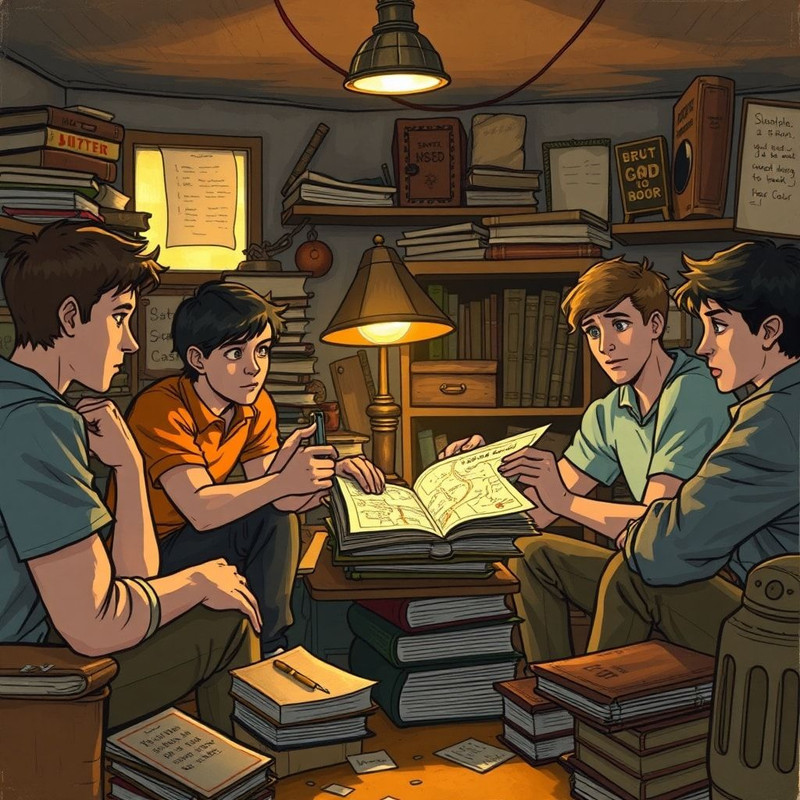
Monday, March 2, 2026

The Fractured Code: A Desperate Transmission from 2038

The air in the lab tasted like burnt copper and ozone, thick enough to chew

The air in the lab tasted like burnt copper and ozone, thick enough to chew. Elara’s fingers hovered over the Chronos Device’s flickering interface, the hum of its vacuum tubes vibrating through her bones like a second heartbeat. Outside, the city of 2038 pulsed with the cold glow of corporate data towers, their beams slicing through the smog like blades. Each light was a reminder: the internet wasn’t free anymore. It was a gated community, a privilege doled out in microtransactions and bandwidth tolls. And they were about to burn it all down.

At DotNXT let's Unfold the story of a gamble against time itself—a desperate push to mend a broken future by revisiting the moment it all went wrong.

The data chip in her hand was small, no bigger than her thumbnail
Fantasy/Fiction
In 2038, the internet is a corporate wasteland of paywalls and digital apartheid. Elara and Silas risk everything to send a warning back to 2017—a data packet that could rewrite history. But time is a fragile thread, and the cost of changing the past may be their own erasure. Can a single message undo decades of decay?

---

The Weight of a Whispered Myth

Elara’s earliest memory of the real internet was a bedtime story her mother told, voice hushed like she was sharing a secret too dangerous to speak aloud. "Once," her mother had said, "you could type anything into a little box, and the whole world would answer. No fees. No filters. No one watching." Elara, six years old and clutching a cracked tablet that barely held a charge, had stared at the screen’s dead pixels and tried to imagine it. A world without loading screens that stuttered like a dying man’s breath. A world where knowledge wasn’t a commodity.

By the time she was twelve, the stories had stopped. The last independent news site had folded, its final article a eulogy for the open web. The headline, still burned into her retinas: "We Sold the Internet. Now We’re Selling Ourselves." The image beneath it—a pixelated crowd holding signs that read "Data is a Human Right"—had been scrubbed from most archives. Only the deep-web holdouts, the digital archaeologists, still passed it around like contraband.

Now, at twenty-eight, Elara’s hands were calloused from years of prying open discarded tech, her nails permanently rimmed with the grime of salvage. The lab they’d claimed—a derelict server farm on the outskirts of the city—smelled of stale air and the ghost of a thousand forgotten passwords. Silas, her mentor, sat hunched over a holographic display, his fingers tracing the skeletal structure of the 2017 internet like a blind man reading braille. The blue light of the projection cast his face in sharp relief, deepening the lines around his eyes. He looked older than his fifty-two years.

"You ever wonder what it was like?" Elara asked, her voice barely above the hum of the lab’s jury-rigged power grid. "Not the stories. The feeling."

Silas didn’t look up. "Like standing in a storm with no umbrella," he said. "Terrifying. Exhilarating. And then someone handed you an umbrella and told you it was for your own good."

A beat of silence. The air smelled like burnt plastic and the faint, sweet tang of Silas’s synth-coffee—cheap, bitter, the kind that stained your teeth brown. Elara exhaled through her nose, watching her breath fog the cold air. Outside, a corporate drone buzzed past the broken window, its searchlight sweeping the alley like a jailer’s torch.

"We’re running out of time," she said.

Silas finally looked at her. His eyes were bloodshot, the whites threaded with red. "Aren’t we all."

---

The Salt of Old Regrets

The first time Silas had tried to explain the Chronos Device, Elara had laughed. Not because it was funny, but because the alternative was screaming.

"Time travel," he’d said, tapping a schematic projected onto the lab’s cracked wall. "Not the kind with DeLoreans or phone booths. The kind that whispers."

She’d stared at the equations, the tangled web of quantum entanglement and temporal resonance. "This looks like someone tried to explain a migraine in math."

Silas had smiled, just a little. "That’s because it is a migraine. For the universe."

The theory was simple, in the way all terrible ideas were simple: if time was a river, then data was the current. And if you could ride that current backward, just for a moment, you could drop a single pebble into the water. A ripple. A nudge. Not enough to change the course of history—just enough to tilt it.

The problem was the energy. The Chronos Device didn’t just use power. It consumed it, like a black hole in reverse. They’d spent months siphoning electricity from dormant city grids, bypassing firewalls with code so old it predated the corporate overlords. Every watt was a risk. Every second the machine ran was a beacon, a flare screaming "Here we are! Come and get us!" to the security forces of OmniNet.

Elara ran her fingers over the device’s casing, tracing the copper wiring like veins. The metal was warm, almost alive. "What if it doesn’t work?"

Silas didn’t answer right away. He walked to the lab’s single intact window, the one that overlooked the city’s sprawl. The towers of PrimeNet and OmniCorp loomed in the distance, their logos pulsing like slow, mechanical heartbeats. "Then we die," he said finally. "And the future stays broken."

Elara swallowed. The taste of copper filled her mouth. She thought of the last time she’d tried to access an unfiltered news site. The loading screen had spun for thirty seconds before a pop-up appeared: "This content requires a Premium Access Pass. Would you like to upgrade?" She’d thrown the tablet across the room.

"It’ll work," she said.

Silas turned back to her. His face was unreadable. "I know."

---

The Ghost in the Machine

The Chronos Device’s interface was a relic, a Frankenstein’s monster of salvaged tech. Elara had built it from the ground up, soldering circuits by hand, writing code in languages so obscure they felt like incantations. The core was a vacuum tube array, its glass bulbs glowing with an eerie blue light, like the eyes of something ancient and hungry. Silas had called it "the heart of the beast." Elara thought it looked more like a bomb.

She booted it up now, her fingers flying over the holographic keyboard. The machine whined, a high-pitched keen that set her teeth on edge. The air around it shimmered, distorting like heat rising off pavement. On the central display, a temporal map unfolded—a swirling vortex of data, the threads of time unraveling like frayed rope.

"Target locked," she murmured. "2017. November 21st. 14:37 EST."

Silas leaned in, his breath warm against her cheek. "The day before the vote."

The vote. The one that had killed the internet. The FCC’s decision to repeal net neutrality, buried under layers of legalese and corporate doublespeak. The moment the future had been sold, piece by piece, to the highest bidder. Elara had watched the footage a hundred times—the empty chambers, the bored senators, the vote tallies scrolling across the screen like a death knell. 3-2. Repeal passed.

She thought of the activists who’d fought it. The protests. The petitions. The endless, exhausting cycle of hope and defeat. They’d been outmatched. Outspent. Outmaneuvered. And in the end, they’d lost.

"We’re not changing history," Silas said, as if reading her thoughts. "We’re giving them a choice."

Elara nodded. The data chip in her hand was small, no bigger than her thumbnail. It held their message—a compressed archive of the future. Images of 2038’s digital wasteland. Predictive models of corporate monopolies. Personal testimonies from people trapped behind paywalls. A warning. A plea. A ghost from a future that must not be.

She slotted the chip into the device. The machine’s hum deepened, vibrating through the floor, through her bones. The blue light intensified, casting long shadows across the lab’s walls. For a moment, the air smelled like rain.

Then the display flickered. A ghostly image superimposed itself over the temporal vortex—a coffee shop in 2017. Bright. Alive. A woman sat at a table, typing on a laptop, her fingers flying over the keys. A kid beside her laughed, watching something on a tablet. No loading screens. No pop-ups. No "Upgrade to continue."

Elara’s breath caught. The woman looked up, as if sensing her gaze. For a heartbeat, their eyes met across time. Then the image dissolved, swallowed by the vortex.

Silas’s hand tightened on her shoulder. "They can’t lose this," he said.

Elara didn’t answer. She didn’t trust her voice.

---

The Language of Ghosts

The message wasn’t just data. It was a story.

Elara had spent months crafting it, weaving together the raw, unfiltered truth of 2038. She’d included the economic models, yes—the projections of small businesses choked out by bandwidth fees, the algorithms that turned dissent into static. But she’d also included the human cost. The stories of people who’d grown up never knowing a free internet. The kids who’d traded their lunch money for an hour of unfiltered search results. The artists who’d had their work buried under paywalls, their voices silenced by corporate curation.

She’d included a recording of her mother’s voice, crackling with static. "They took the light out of the world," she said. "And no one even noticed until it was too late."

Silas had argued against it. "It’s too personal," he’d said. "Too emotional."

Elara had shaken her head. "That’s the point."

Now, as the Chronos Device hummed, its energy signature spiking like a fever, she wondered if it would be enough. If a single data packet could undo decades of decay. If the past would even listen.

The machine whined, a sound like a dying animal. The blue light pulsed, faster now, erratic. The air smelled like ozone and something else—something metallic, like blood.

"Elara," Silas said, his voice tight. "We’re out of time."

She didn’t look at him. Her fingers flew over the interface, making final adjustments. The temporal vortex on the display was collapsing, the threads of time snapping back into place like elastic. The coffee shop flickered again, the woman’s face a blur of pixels. She was typing faster now, her brow furrowed. As if she could feel them.

"Almost there," Elara whispered.

The machine roared. The lab shook. The blue light turned white.

And then—

Silence.

---

The Static Between Then and Now

On a late November afternoon in 2017, Amelia "Amy" Vance felt a jolt. Not a physical one. Something deeper. A ripple in the air, like the moment before a storm breaks. She was hunched over her laptop in a coffee shop, the scent of espresso and cinnamon thick in the air. The hum of conversation around her was a low, comforting murmur. Outside, the city moved in its usual rhythm—cars honking, people laughing, the distant wail of a siren.

She was writing an article about the impending net neutrality repeal, her fingers flying over the keys. "The internet is on life support," she typed. "And the FCC is about to pull the plug." The words felt hollow. She’d written a dozen versions of this piece already. No one was listening.

Then her screen glitched.

A flash of blue light. A cascade of symbols, like hieroglyphs from a dead language. And then—

A file. FUTURE.NXT.

Amy stared at it. Her first thought was virus. Her second was hoax. But something about it felt… wrong. Not in a malicious way. In a way that made the hairs on the back of her neck stand up.

She isolated the file, ran it through every decryption tool she had. The symbols resolved into images. Into data.

And then she saw it.

The future.

Not as a prediction. Not as a warning. As a fact. A cold, hard, undeniable reality.

The images were stark. A world where the internet was a series of walled gardens, each with its own toll booth. Where independent journalism was a relic, buried under layers of corporate curation. Where dissent was a luxury item, sold to the highest bidder. Where children grew up never knowing the wild, open plains of the early web.

Amy’s breath came fast. Her hands shook. She thought of her niece, barely five years old, who already knew how to navigate a tablet better than she did. What kind of world was she inheriting?

The file included a timestamp. 2038.

She laughed. It was a sharp, brittle sound. Time travel. Of course.

But then she saw the predictive models. The economic projections. The personal testimonies. The sheer weight of the data. It wasn’t just plausible. It was inevitable.

Unless someone stopped it.

Amy’s fingers hovered over the keyboard. The scent of printer toner from the shop’s back room suddenly felt like the sterile smell of a morgue. She thought of the activists she’d interviewed. The senators who’d dismissed her. The people who’d shrugged and said, "It’s just how things are."

She opened a new document.

And she started to write.

---

The Alchemy of a Turning Tide

The first person Amy showed the file to was her editor, Marcus. He took one look at the data and called it "a paranoid fantasy." The second was a cryptographer friend, who verified the encryption’s origin as "impossible." The third was Senator Davies, a man who’d built his career on deregulation. He watched the projections in silence, his face growing paler with every passing second. When it was over, he didn’t speak for a long time. Then, quietly: "My constituents… they’d be choked out of existence."

The file spread like wildfire.

At first, it was just the usual suspects—the activists, the journalists, the people who’d been screaming into the void for years. But then it jumped the fence. A mainstream news outlet picked it up. Then another. Then a senator’s aide leaked it to the press. The "future-data," as it came to be called, was everywhere. In op-eds. In town halls. In the comments sections of articles that had once dismissed net neutrality as a "niche issue."

Amy watched it happen from her apartment, the glow of her laptop screen casting long shadows across the walls. The scent of rain drifted in through the open window, mixing with the stale smell of takeout containers. She hadn’t slept in days. Neither had anyone else.

The turning point came on a Tuesday. A live debate. A pro-deregulation senator, usually unflappable, stammered through his talking points. Across from him, a young activist held up a printout of the future-data. "This isn’t about profit, Senator," she said, her voice clear and resonant. "This is about freedom."

The applause was deafening.

Amy closed her laptop. Outside, the city hummed, alive and unaware. She thought of Elara and Silas, huddled in their lab in 2038. She thought of the kid in the coffee shop, laughing at something on his tablet. She thought of the future, not as a fixed point, but as something malleable. Something theirs.

She opened a new document.

And she started to write again.

---

The Fracture in the Timeline

Back in 2038, the Chronos Device’s blue light flickered, then died. The lab plunged into darkness, the only sound the distant wail of alarms. Elara slumped against the console, her body vibrating with residual energy. The air smelled like burnt wiring and something older—something like the first rain after a drought.

Silas was already moving, his hands a blur as he wiped the lab’s systems, scrubbing their digital footprint from OmniNet’s servers. The encrypted data stick he pressed into her palm was warm, almost feverish. "The back alley," he said. "Twenty minutes. Maybe less."

Elara didn’t look at him. She couldn’t. The sound of boots echoed in the corridor outside, growing louder. Security forces. OmniNet’s private army, come to erase them.

Silas’s voice was a whisper. "Remember what we fought for."

She ran.

The alley was a maze of shadows and rusted fire escapes. The scent of damp concrete and rotting garbage filled her nose. She found the conduit Silas had mentioned—a hidden access panel, its edges rusted shut. She pried it open with her bare hands, her fingers coming away bloody. Behind her, the lab’s alarms wailed, a sound like a dying animal.

She didn’t look back.

---

The Echoes of What Might Have Been

The transit lines were a relic, a network of tunnels beneath the city that had once carried people from place to place. Now they carried only rats and the occasional stray signal. Elara moved through the dark, the data stick clutched in her fist like a talisman. The air smelled of damp and rust, the walls slick with condensation. Somewhere above her, the city pulsed, indifferent.

She thought of the coffee shop. Of the woman typing, her fingers flying over the keys. Of the kid laughing at his tablet. Had it worked? Had the message gotten through?

She didn’t know. She couldn’t know. Not yet.

The data stick in her hand held the answers. But she couldn’t risk accessing it. Not here. Not now. OmniNet’s security forces would be scanning for any trace of the Chronos Device’s signature. One wrong move, and they’d find her.

She kept running.

---

The Weight of a Future Unwritten

The safe house was a crumbling apartment on the city’s outskirts, its walls lined with salvaged tech and the ghosts of a hundred failed rebellions. Elara collapsed onto the floor, her breath coming in ragged gasps. The data stick burned in her pocket, a physical reminder of the choice she’d made. Of the choice they’d made.

She pulled it out, turning it over in her hands. The metal was warm, almost alive. She slotted it into a terminal, her fingers trembling. The screen flickered to life, displaying a single file. FUTURE.NXT.

She hesitated. Then she opened it.

The data unfolded like a flower, petals of light and color. News articles. Protest footage. A video of Senator Davies, his face grim, announcing a new bill to "protect the open internet." A clip of the young activist from the debate, her voice ringing out over a crowd of thousands. "This is our fight. This is our future."

Elara’s breath caught. The images were raw, unfiltered. A world where the internet was still free. Where the fight wasn’t over.

Where they’d won.

She thought of Silas. Of the lab. Of the blue light fading into darkness. She thought of the future they’d sacrificed, the one they’d never see.

And for the first time in years, she cried.

---

Echoes & Questions

- What if the warning had arrived too late? Would 2017 have shrugged it off like another conspiracy theory? - The Chronos Device didn’t just send data—it sent emotion. Could a message from the future ever truly be objective? - In 2038, the internet is a privilege. What digital rights are we taking for granted today? - Silas stayed behind to cover their tracks. Was his sacrifice an act of love, or an admission of defeat? - The future-data spread like wildfire. But how much of that fire was real, and how much was wishful thinking? - If you received a message from the future, would you believe it? Or would you call it madness?

---

Moments That Stay With You

- The coffee shop. The ghostly image of 2017, vibrant and alive, superimposed over the temporal vortex. The woman typing, the kid laughing—unaware of the future bearing down on them. - The vote. The moment the FCC’s repeal passed, 3-2. The cold, clinical tally of a world sold to the highest bidder. - The data stick. Small, warm, almost alive. The physical weight of a future rewritten. - Silas’s whisper. "Remember what we fought for." A farewell across time. - The activist’s voice. "This isn’t about profit. This is about freedom." The moment the tide turned. - The transit tunnels. Elara running through the dark, the data stick clutched in her fist like a prayer. - The safe house. The flickering screen, the images of a future unbroken. The first tears in years.

---

The lab plunged into darkness, the only sound the distant wail of alarms

Conclusion

The future isn’t a fixed point. It’s a thread, frayed and fragile, woven from a thousand small choices. Elara and Silas knew that better than anyone. They’d seen the unraveling firsthand—the slow decay of a free internet, the creeping tendrils of corporate control, the moment the world had shrugged and said, "It’s just how things are." Their gamble wasn’t just against time. It was against apathy. Against the quiet, insidious belief that some things were too big to change.

And for a moment, it worked. The message got through. The tide turned. The future breathed. But the cost was steep. Silas stayed behind. Elara ran. And the world they’d fought for remained, for them, a ghost.

What digital rights are we taking for granted today? What small choices might echo through the decades, shaping the world our children inherit? The story of Elara and Silas isn’t just a warning. It’s a call to vigilance. To action. To the belief that the future is still ours to write. Share your thoughts in the comments—what freedoms do you refuse to surrender? Join the conversation, and let’s unfold the future together.

The Architect’s Fading Seal: A Warden’s Memory and the Prison He Forgot

The air inside the antechamber clung like wet wool, thick with the metallic tang of ozone and the ghost of...

The Architect’s Fading Seal: A Warden’s Memory and the Prison He Forgot

The air inside the antechamber clung like wet wool, thick with the metallic tang of ozone and the ghost of old incense. A silver web pulsed just beyond the threshold, its threads humming a warning only skin could hear. Kit’s fingertips tingled as they brushed the edge—static, then a sharp bite, like a needle threading his nerves. Beside him, Jax’s grappling hook trembled in his grip, the iron teeth glinting under the dim glow of Lyra’s arcane sensor. She exhaled, slow and controlled, but her breath hitched anyway. "Dude," Jax muttered, "I know we’re breaking into an ancient wizard’s tower, but are we sure the owner won’t just… materialize behind us?" Kit didn’t answer. The question wasn’t absurd. It was impossible. Because their employer—Elder Corvan, the man who’d hired them to bypass his own wards—was already there, perched on a collapsible stool like a spectator at his own funeral, scribbling in a notebook with the detached curiosity of a man watching ants march.

Beyond the Veil, the tower unfolded like a dying man’s last exhale
Editorial
When arcane locksmith Kit and his team breach Elder Corvan’s tower to retrieve a lost grimoire, they uncover more than dusty wards—they awaken a prison built by a mind unraveling. A tale of forgotten magic, crumbling seals, and the terrifying cost of memory’s decay.

At DotNXT let’s Unfold the story of Elder Corvan, a man whose mind was once a cathedral of arcane brilliance, now a labyrinth of half-remembered corridors, where the doors locked themselves from the inside.

---

The Commission That Smelled of Forgotten Tea

The Alchemist’s Respite was the kind of tavern that existed in the cracks between cities—a place where the air smelled of burnt sugar and old parchment, where the walls sweated honey-colored light from enchanted lanterns that had long since forgotten how to dim. Kit had chosen a corner booth, its velvet upholstery patched with threadbare memories of better days. The tea Corvan ordered arrived in a chipped porcelain cup, its leaves swirling like tiny, drowned corpses. The wizard peered at Kit over spectacles that had slipped halfway down his nose, his beard a wild thicket of silver and stray crumbs. "Young man," he said, voice surprisingly steady, "if I could recall which wards I installed, I wouldn’t have needed to hire you."

He waved a gnarled hand. A cloud of glittering motes erupted from his sleeve, catching the light like scattered stars. The job was simple on paper: retrieve a tome from his private study, a book he’d sealed behind layers of forgotten magic but now needed—urgently, though he couldn’t quite say why. No danger of him "showing up" to stop them, Kit realized. Corvan was already there, watching them navigate the ruins of his own mind. The irony settled in Kit’s throat, bitter as the tea, as the scent of stale beer and older parchment wrapped around them both.

Kit pressed for details. The wards. The traps. The why. Corvan’s answers were fragments, punctuated by distant chuckles. "Oh, that one was rather clever, wasn’t it?" or "I believe I layered a few enthusiastic protections there." It wasn’t a break-in. It was an excavation. And the deeper they dug, the more Kit wondered if they’d find a book—or a bomb.

---

The Memory Veil’s First Sting

The silver web shimmered like a spider’s dream, its threads pulsing with a rhythm just shy of a heartbeat. Lyra’s gloved fingers hovered over it, her sensor humming a low, ominous thrum. "This isn’t a tripwire," she said, voice tight. "It’s a full-spectrum denial field. Active dampening, temporal distortion, localized mana drain." Jax let out a whistle, sharp enough to cut the silence. "So if we step through, we age backwards, forget how to cast, and our spells fizzle?"

Kit nodded. "Or worse. Corvan just said he liked to experiment."

The old wizard himself sat a few feet back, sketching in his notebook. "Ah, the Memory Veil!" he chirped, as if announcing a particularly charming garden feature. "Quite proud of that one. Keeps out the curious. Or did, anyway." He squinted at the web, then at Kit. "What was it I wanted you to retrieve again?"

Lyra placed a crystalline prism on the floor. It glowed amber, pushing back against the silver like a candle against a storm. A crack echoed through the chamber—faint, but enough. The web dissolved into mist, leaving only the scent of ozone and the weight of something watching.

---

The Tower’s Breath: Dust and the Scent of Old Iron

Beyond the Veil, the tower unfolded like a dying man’s last exhale. The walls, once carved with celestial patterns, were now choked with dust and cobwebs, the stone beneath groaning under the weight of centuries. The air was thick with the scent of ancient paper, dried herbs, and something metallic—like old blood, or the taste of a coin left too long on the tongue. Kit imagined no one had cleaned this place in decades. Maybe longer.

Jax kicked up a cloud of dust with his boot. "Looks like a dragon’s hoard, if the dragon was a librarian with a hoarding problem."

Lyra’s sensor spiked as they passed dormant alarm runes, their magic dormant but not dead. "He really did layer everything," she murmured. "Some of these are techniques I’ve only read about in theoretical texts."

Corvan trailed behind, humming. He tapped a wall. "Oh, yes. This was where I considered the Temporal Loop Ward. Too much paperwork, though."

Kit’s stomach twisted. Too much paperwork. The words hung in the air like a curse. This wasn’t forgetfulness. It was a mind that had once bent time itself to its will, now reduced to trivialities. He wondered what other horrors Corvan had "considered" and then abandoned for equally flimsy reasons.

---

The Sentient Catalog’s Rage

The thump-thump-thump started on the third floor. A slow, deliberate rhythm, like a giant’s heartbeat. The air smelled of wet earth and old magic, the humidity clinging to their skin. Then came the whine—high-pitched, mechanical, the sound of gears grinding against their own purpose.

"What is that?" Jax’s hand went to his sword.

Lyra’s sensor flared. "Fluctuating energy signature. Strong. Unstable."

Corvan stopped humming. His eyes sharpened, just for a second. "Ah. The Sentient Catalog. A temperamental creation. It… organizes."

They turned the corner.

A brass-and-wood monstrosity loomed over the shelves, its multi-limbed body smashing books to the floor before snatching them back up, re-shelving them in what appeared to be alphabetical chaos. One limb swung wildly, its clawed tip narrowly missing a glass orb suspended from the ceiling. The thump was the sound of a tome hitting the ground. The whine was the sound of a mind breaking.

Kit’s pulse hammered in his throat. This wasn’t old magic. It was active. Hostile. Born of a mind that had once been brilliant, now fraying at the edges.

---

The Golden Gauntlet’s Cruel Jest

The study lay beyond a narrow passage, its entrance carved with golden runes that shimmered like trapped sunlight. Lyra’s sensor screamed. "This isn’t a ward. It’s a puzzle."

Corvan perked up. "Ah, the Golden Gauntlet! A little something I devised for… well, I forget why. But it’s very effective."

Jax grunted. "More effective than you, trying to get into your own house?"

The wizard chuckled. "Indeed."

Lyra’s device projected a diagram of the runes. "Temporal displacement, gravity inversion, polymorph spells. One wrong step, and it resets. With a new sequence."

Kit’s hands went cold. This wasn’t a forgotten safeguard. It was a game. A cruel, brilliant game designed by a mind that had once delighted in tormenting intruders. He pictured Corvan, younger, laughing as some poor soul turned into a toad, then reverted, only to find themselves falling up toward the ceiling.

They had no choice. Trial and error. Slow. Painstaking. While the Sentient Catalog raged behind them, and the tower itself seemed to hold its breath.

---

The Study’s Secret: Cinnamon and Old Blood

Hours later, the final rune clicked. The golden carvings dulled. The passage opened.

The study was small, circular, dominated by a desk carved from dark wood. Scrolls littered the floor, their edges brittle with age. The air smelled of ink, beeswax, and—faintly—cinnamon. A single book rested on a pedestal, its leather cover blank, its pages untouched by time.

"The Grimoire of Unraveling," Corvan breathed. His voice was clear. Reverent.

Kit lifted the book. It hummed in his hands, cool and supple. No dust. No decay. As if it had been waiting.

Corvan took it, his fingers trembling. A warm light bloomed from the pages, casting shadows that danced like memories half-remembered. The scent of night jasmine filled the air, sweet and cloying. Then—cinnamon. Stronger now. Metallic. Like old blood.

The tower groaned.

---

The Architect’s Awakening

Corvan’s eyes blazed. Not the faded sapphires from before. This was the gaze of a man who had once commanded storms. "The wards," he rasped. "They weren’t for trespassers. They were for containment. For prevention."

Lyra’s sensor screamed. "Power buildup in the lower levels. Something elemental."

Jax drew his sword. "A monster? A demon?"

Corvan’s laugh was a dry, papery sound. "Something far older."

The tower breathed around them. The walls pulsed. The thump-thump-thump of the Sentient Catalog was now the sound of a heart beating too fast, too hard. Kit’s skin prickled. This place was alive. And it was waking up.

---

The Prisoner’s Lament

Corvan paced, his fingers tracing patterns in the air. "The seals are weakening. The resonance frequency is too high. We need to stabilize the core."

Kit’s stomach dropped. Their mission was to retrieve a book. Not to prevent an apocalypse.

Lyra’s voice was barely a whisper. "He’s right. There’s something in the lower levels. Something struggling."

Corvan’s eyes locked onto Kit’s. "I imprisoned it here. Centuries ago. The tower is its cage. Its power dampener. But my memory faded. And with it, the maintenance of its prison."

A wave of despair crashed over Kit. The forgetful wizard wasn’t just absent-minded. He was a failing jailer. And his lapses in memory threatened not just himself, but the world beyond.

The true weight of Corvan’s words hit him like a physical blow. If I could remember… I wouldn’t have hired your team.

He hadn’t forgotten his passphrases.

He’d forgotten the prison.

---

The Warden’s Last Stand

The tower shuddered. Dust rained from the ceiling. The scent of cinnamon and old blood was now a storm, thick and suffocating. Corvan clutched the Grimoire, its light flickering like a dying star. "The Nexus points," he muttered. "The Catalyst. The Veil. They must be reactivated."

Kit’s hands shook. They weren’t burglars anymore. They were custodians. Accidental. Unprepared. Forced to understand the architect’s final, desperate design in the span of a single, terrifying night.

Lyra’s sensor beeped wildly. "The core’s destabilizing. We have minutes."

Jax tightened his grip on his sword. "So what’s the plan?"

Corvan’s eyes were wild, darting between the present and the past. "The Grimoire is the key. But the wards… they’re tied to me. To my memory."

Kit understood. To save the world, they had to save Corvan first.

---

The Memory They Chose to Keep

The tower groaned one last time, a sound like the earth itself splitting open. Then—silence. The air stilled. The scent of cinnamon faded, replaced by the familiar tang of ozone and old paper.

Corvan stood in the center of the study, the Grimoire clutched to his chest. His eyes were clear. Present. He looked at Kit, at Lyra, at Jax. "You didn’t just retrieve a book," he said softly. "You reminded me of what I was. Of what I had to be."

The Sentient Catalog whirred to a halt, its brass limbs folding neatly at its sides. The golden runes in the passage dulled, their magic spent. The tower, for the first time in centuries, felt still.

Kit exhaled. The weight of the night settled on his shoulders, but it was a weight he could carry. They had done more than break into a wizard’s tower. They had remembered one.

---

Echoes & Questions

- What happens when the jailer forgets the prisoner—and the prisoner remembers everything? - Can a mind too vast for its own memory ever truly be whole again? - Is a prison still a prison if its architect no longer believes it exists? - What do you bury when you bury a memory too dangerous to keep? - How much of a man is left when the magic fades but the guilt remains? - If a tower is a mind, what does it dream of when its master sleeps?

---

And his lapses in memory threatened not just himself, but the world beyond

Moments That Stay With You

- The first sting of the Memory Veil, a warning that wasn’t meant for them. - Corvan’s absent-minded hum as the Sentient Catalog smashed books behind them. - The click of the final rune in the Golden Gauntlet, a sound like a key turning in a lock. - The scent of cinnamon and old blood, the tower’s way of saying remember. - The moment Corvan’s eyes cleared, not with magic, but with memory. - The silence after the storm, when the tower finally exhaled. - The weight of the Grimoire in Kit’s hands, a book that was never just a book.

---

Conclusion

The contract had been simple: retrieve a lost book. But some locks aren’t meant to be picked—they’re meant to be remembered. Elder Corvan’s tower wasn’t just a home; it was a prison, a mind, and a warning. And Kit, Jax, and Lyra hadn’t just broken in. They’d woken something up. The question now wasn’t whether they’d survive the night, but whether the world would survive Corvan’s memory. As the dust settled and the wards hummed back to life, Kit realized the most dangerous magic isn’t the kind that turns men into toads—it’s the kind that lets them forget why they built the cage in the first place. What forgotten keys are hiding in your past? Share your own stories of memory, magic, and the things we lock away in the comments below. And if you’re brave enough to face the labyrinths of your own mind, let DotNXT be your guide—where every story unfolds.

Sunday, March 1, 2026

The Barking Oracle: How Five Teens, a Rogue Scientist, and a Genetically Awakened Dog

It was a word—low, deliberate, shaped by something that shouldn’t exist

The Barking Oracle: How Five Teens, a Rogue Scientist, and a Genetically Awakened Dog Outsmarted the Impossible

The crate’s whimper wasn’t a whine. It was a word—low, deliberate, shaped by something that shouldn’t exist. Chloe’s fingers stilled around the tarnished silver spoon she’d been cataloging. The antique shop’s back room smelled of lemon oil and old secrets, but this sound was new. Wrong. Human.

The thief would strike at odd hours: 2:17 AM, 4:43 PM, 11:02 on a Tuesday
Editorial
A golden retriever named Buster speaks—and solves crimes. When a clandestine lab hunts him down, five teenage detectives must outwit a shadowy organization to protect their extraordinary friend. From stolen gnomes to cold-blooded murder, this is the story of an unlikely alliance that redefined justice, loyalty, and the meaning of family.

At DotNXT let's Unfold the story of Buster, the golden retriever who spoke in baritone, solved crimes with his nose, and became the most dangerous secret in Willow Creek.

---

The Night the Lab Spoke Back

Mrs. Gable’s science lab was a relic of 1970s pedagogy: Bunsen burners with frayed cords, a skeleton missing three ribs, and the perpetual scent of burnt popcorn from the microwave in the corner. The air hummed with the quiet static of fluorescent lights, the kind that made your teeth ache if you listened too long. Chloe had spent the last twenty minutes inventorying the shop’s stolen silver, her pen scratching against graph paper in precise, looping script. Leo was muttering about Wi-Fi dead zones, his fingers flying over a laptop balanced on a stack of old encyclopedias. Maya sat cross-legged on the floor, her sketchbook open to a half-finished portrait of a moth, its wings rendered in delicate, smudged charcoal. Sam, ever the kinetic force, was attempting to teach Buster to high-five, his laughter echoing off the linoleum.

Then the crate whimpered.

"Let… me… out."

The words slithered into the silence like a blade. Sam’s hand froze mid-air. Leo’s screen went dark, his breath hitching. Maya’s pencil snapped between her fingers. Chloe didn’t turn around. She didn’t need to. The voice had come from the therapy dog—the one Mrs. Gable had dropped off with a breezy, "He’s great for anxiety!"

Buster shifted in the crate, his golden fur pressing against the metal slats. His brown eyes, usually soft with canine patience, were sharp. Focused. Aware. "It’s stuffy in here," he said, his voice a clear, almost theatrical baritone. "And the acoustics are appalling. Do you humans not value sound quality?"

Leo’s mouth opened. Closed. Opened again. "Did—did the dog just—"

"Yes, Leo," Buster sighed. "And no, I am not a ventriloquist’s dummy. Though I suppose that would be a more palatable explanation for your fragile sensibilities."

Chloe finally turned. The crate was small, too small for a dog of Buster’s size, but he didn’t seem to mind. He stretched, his paws pressing against the door, and the latch clicked open with a sound like a gunshot. He stepped out, shook himself, and fixed them each with a look that was equal parts amusement and pity. "Well? Are we going to stand here all evening, or shall we address the elephant in the room? Or, in this case, the dog."

Maya was the first to move. She crawled forward, her sketchbook forgotten, and reached out a trembling hand. Buster sniffed her fingers, then licked them. "You taste like charcoal and lavender soap," he said. "An interesting combination."

Sam, ever the optimist, grinned. "Dude. You’re talking."

"Astute observation," Buster replied dryly. "Now, if you’re quite finished with the existential crisis, I believe there’s a bowl of kibble with my name on it."

And just like that, the world tilted. The air in the lab wasn’t just thick with the scent of formaldehyde and old textbooks anymore. It crackled with something else—something electric, something alive. The Curiosity Club, a ragtag group of kids who asked too many questions, had just become the custodians of the impossible.

---

The Salt of Old Regrets

The first case wasn’t a murder. It wasn’t even a theft, not really. It was garden gnomes.

Mrs. Henderson, Chloe’s next-door neighbor, was a woman of precise habits. Her lawn was a chessboard of manicured squares, her rose bushes pruned to within an inch of their lives. Every morning at 7:13 AM, she watered her petunias with a watering can shaped like a smiling frog. Every evening at 6:47 PM, she adjusted the ceramic gnome in the center of her garden—the one holding a fishing rod, its red hat chipped from years of weathering—by exactly three degrees to the left.

But the gnomes were disappearing.

One by one, they vanished. The fisherman. The accordion player. The gnome with the suspiciously knowing grin. The adults blamed squirrels. Teenagers. A particularly ambitious raccoon. Mrs. Henderson, however, was convinced it was something darker. "They’re being taken," she whispered to Chloe one afternoon, her hands shaking around a cup of lukewarm tea. "I can feel it. Like someone’s watching."

Chloe, ever the pragmatist, had nodded and promised to look into it. But it was Buster who took the case seriously.

"Garden gnomes," he grumbled, sprawled across Chloe’s bedroom rug like a disgruntled lion. "How utterly beneath my intellectual capacity."

Sam, perched on the edge of Chloe’s bed, leaned forward. "Come on, Buster. It’s practice. Low stakes. High reward."

Buster sighed, a deep, rumbling sound that vibrated the floorboards. "Very well. But if I solve this, I expect a steak. A real one. Not that kibble nonsense."

The next evening, they descended upon Mrs. Henderson’s garden. The air was thick with the scent of damp earth and the faint, acrid tang of the compost heap behind her shed. Leo’s drone buzzed overhead, its camera scanning for footprints or disturbed soil. Maya crouched near the flowerbeds, her fingers tracing the outlines of the remaining gnomes. Sam, ever the diplomat, was attempting to interview Mrs. Henderson about her recent visitors, though she kept getting sidetracked by stories of her late husband’s prize-winning dahlias.

Buster, however, was focused on the azaleas.

He sniffed around the base of the bushes, his tail wagging in slow, deliberate arcs. "Hmm," he murmured. "Freshly turned soil. And something else… metallic. Almost like…"

His nose nudged a loose paving stone. Beneath it, half-buried in the damp earth, was a silver button. Not just any button—a tiny, tarnished thing, the kind used on old-fashioned gardening gloves.

Chloe picked it up, her fingers brushing against the cold metal. "This isn’t from Mrs. Henderson’s things."

Buster’s ears perked. "No. It’s from someone who didn’t want to be seen."

The button was their first clue. Their first lead. And it was Buster, the dog who had once scoffed at the case, who had found it.

---

The Man Who Collected Lost Things

The button led them to Barty Jenkins.

Barty lived three blocks over in a house that smelled of mothballs and regret. The walls were lined with shelves, each one crammed with "found objects": a single earring, a child’s mitten, a chipped teacup with a faded floral pattern. He was a hoarder, but not the kind you saw on TV. There was no filth, no chaos. Just… things. Lost things. Things no one else wanted.

"I don’t steal," he said when they confronted him, his voice trembling. "I rescue."

Chloe held up the button. "This was under Mrs. Henderson’s azaleas."

Barty’s eyes flickered to the silver disc, then away. "I don’t know what you’re talking about."

Buster, sitting at Chloe’s feet like a well-trained (if unusually large) dog, let out a low growl. "Liar."

Barty flinched. "I—I didn’t mean any harm! The gnomes were just… sitting there. Unloved. Unappreciated."

Leo, who had been quietly filming the exchange on his phone, cleared his throat. "So you did take them."

Barty’s shoulders slumped. "I was going to return them. Eventually."

The gnomes were recovered that same afternoon, each one carefully wrapped in newspaper and tucked into a cardboard box. Mrs. Henderson cried when she saw them, her hands shaking as she adjusted the fisherman’s hat just so. The police, initially skeptical of the "kids with the talking dog," couldn’t argue with the evidence. Barty confessed. The case was closed.

But something had shifted.

Word spread. Not about Buster—not yet—but about the "weird kids who actually find things." Captain Davies, the town’s grizzled police chief, started leaving messages on Chloe’s voicemail. Not official requests. Not yet. Just… questions. Casual inquiries. "Heard you helped Mrs. Henderson out. You know, we’ve got a few… unsolved cases. Cold ones."

Chloe deleted the messages. But she didn’t forget them.

---

The Candy Aisle Conundrum

The convenience store thefts started small.

First, it was just the candy. The good stuff—chocolate bars, gummy worms, the kind of treats that made your teeth ache just looking at them. The thief would strike at odd hours: 2:17 AM, 4:43 PM, 11:02 on a Tuesday. They never took anything else. Just the candy. And they never got caught.

Then the hoses disappeared.

Not all of them. Just the long, expensive ones—the ones with the brass fittings, the ones that coiled like snakes in the hardware store’s garden section. The thief would strike at night, cutting through the plastic ties that bound the hoses to the shelves, leaving behind a trail of damp footprints and a single, infuriating question: Why?

The police were baffled. The town was amused. The kids of Willow Creek, however, were intrigued.

"It’s the same person," Leo said one evening, his laptop balanced on his knees. They were gathered in the science lab, the air thick with the scent of stale pizza and Buster’s kibble. "The candy thief and the hose thief. Same MO. Same… vibe."

Buster, sprawled across the floor, let out a snort. "The vibe is desperation. And bad life choices."

Sam, ever the optimist, grinned. "So we’re saying it’s a criminal mastermind?"

"I’m saying it’s someone who’s hungry," Buster replied. "And possibly in need of a hobby."

The next night, they staked out the convenience store. Leo’s drone hovered overhead, its camera trained on the candy aisle. Maya sketched the scene in her notebook, her pencil moving in quick, sure strokes. Sam, armed with a walkie-talkie and a bag of beef jerky ("for morale"), kept watch from the parking lot. Chloe and Buster, meanwhile, hid behind a display of motor oil, their breath shallow, their eyes fixed on the flickering fluorescent lights.

At 2:17 AM, the thief struck.

They moved like a shadow—quick, silent, almost liquid. One moment the candy aisle was empty. The next, a figure in a dark hoodie was stuffing chocolate bars into a backpack. They didn’t run. They didn’t panic. They just… took. And then they were gone, slipping out the back door like smoke.

Buster’s nose twitched. "Synthetic fibers," he murmured. "Cheap aftershave. And… ferrets."

Chloe blinked. "Ferrets?"

"The thief has ferrets," Buster confirmed. "Or at least, they’ve been in close proximity to them recently."

Leo’s drone footage confirmed it: the thief had left behind a single, unmistakable clue—a tiny, muddy paw print on the linoleum, too small to be a cat’s, too large to be a mouse’s.

The case of the candy aisle conundrum was solved the next day. The thief was a seventeen-year-old named Jamie, who lived in a trailer park on the edge of town with his mom, his little sister, and three ferrets named Larry, Curly, and Moe. He’d been stealing the candy to sell for cash, the hoses to water his mom’s garden. He wasn’t a criminal mastermind. He was just a kid, trying to keep his family afloat.

Captain Davies, when he heard the story, didn’t laugh. He didn’t scoff. He just nodded, his eyes flickering to Buster for the briefest of moments before he turned away.

---

The Night the Heiress Didn’t Come Home

Eleanor Vance was supposed to be untouchable.

She lived in a mansion on the hill, its windows glowing like fireflies in the dark. She drove a car that cost more than most people’s houses. She wore jewelry that sparkled even in the dimmest light. And she was dead.

Her body had been found by the old mill pond, her silk blouse stained with mud, her fingers curled into the damp earth like she’d been trying to claw her way out. The police called it a robbery gone wrong. But Eleanor’s jewelry was still on her body. Her wallet was still in her purse. And her security system, one of the most advanced in the state, had shown no signs of forced entry.

Captain Davies called Chloe at 3:14 AM.

"We’ve got a situation," he said, his voice gruff. "And I think… well. I think you might be able to help."

The crime scene was a nightmare of flashing lights and hushed voices. The air smelled of wet leaves and something darker—something metallic, something wrong. Buster, usually so unflappable, pressed close to Chloe’s side, his ears flat against his head.

"The scent of fear is potent here," he murmured, his voice barely above a whisper. "And something else… floral. Almost like…"

"Lavender," Maya said, her eyes fixed on the muddy bank. "I smell it too."

Leo was already pulling up Eleanor’s financial records on his tablet, his fingers flying over the screen. Sam, pale but determined, was talking to one of the officers, his voice steady despite the tremor in his hands. Chloe, meanwhile, knelt beside the pond, her fingers brushing against the disturbed earth near the water’s edge.

Buster’s nose twitched. "There," he said, nudging a small indentation in the mud. "A heel mark. Small. And the soil here… it suggests a struggle. A dragging motion."

Chloe’s breath caught. "She wasn’t killed here. She was moved."

The lavender scent was the key. It led them to a niche perfumery twenty miles away, to a specific blend of lavender and patchouli that only three people in Willow Creek had purchased in the last six months: Eleanor Vance herself, her estranged niece Bethany, and her longtime gardener, Marcus Thorne.

Bethany had an alibi. Marcus did not.

---

The Gardener’s Gloves and the Scent of Guilt

Marcus Thorne lived in a cottage on the edge of Eleanor’s estate. The air around it was thick with the scent of damp earth and fresh-cut grass, the kind of smell that clung to your clothes long after you left. The garden was immaculate—rows of roses, their petals dewy with morning mist, a vegetable patch bursting with tomatoes and zucchini, a small herb garden where lavender grew in neat, fragrant rows.

Buster’s nose led them straight to the potting shed.

The gloves were old, worn, the leather cracked with age. But they weren’t just dirty. They were stained. Not with soil, not with fertilizer, but with something darker. Something that smelled, as Buster put it, like "old blood in a refined mixture."

Marcus, when confronted, didn’t deny it. He didn’t even try.

"She was going to cut me out," he said, his voice hollow. "Twenty years I worked for that woman. Twenty years. And she was just going to… let me go. Like I was nothing."

Bethany’s alibi, it turned out, was a lie. She’d been at the charity gala, yes—but she’d left early, her coat (drenched in the same lavender perfume) "accidentally" left at Marcus’s cottage. The plan was simple: Marcus would do the dirty work. Bethany would inherit. And no one would ever know.

Except they hadn’t counted on Buster.

---

The Ghost of Willow Creek

The Willow Creek Disappearance was a wound that had never healed.

Clara Henderson—no relation to Mrs. Henderson, though the coincidence wasn’t lost on anyone—had vanished in 1998. She was sixteen, bright-eyed, full of dreams. She’d gone to a high school dance and never come home. Her car was found abandoned near Willow Creek, the driver’s side door open, the keys still in the ignition. No body. No witnesses. No answers.

Twenty-five years later, the case was still open. Still cold.

Until Buster.

The archives room smelled of old paper and forgotten hope. The files were brittle, the ink faded, the edges of the photographs curled with age. Buster, his head resting on Chloe’s lap, let out a low, mournful sigh. "The weight of twenty-five years," he murmured. "It’s a dense accumulation of regret."

Leo was running the photos through forensic software, his screen glowing with grainy, enhanced images. Maya was sketching a timeline, her pencil moving in quick, angry strokes. Sam was interviewing Clara’s classmates, his voice gentle, his questions careful. Chloe, meanwhile, was sifting through the files, her fingers stained with the grime of history.

Buster needed scent.

They convinced Captain Davies to let them into Clara’s childhood bedroom. The room was a time capsule: a teddy bear with one eye missing, a poster of NSYNC on the wall, a diary locked in a desk drawer. The air smelled of mothballs and dried potpourri, but beneath it, Buster found something else—something Clara*. Lavender soap. Strawberry shampoo. And beneath that, the faint, bitter tang of fear.

"Nervous energy," Buster said, his voice soft. "She was afraid."

The last known location was Willow Creek, a place where the air was perpetually damp, where the trees whispered secrets to the wind. Buster spent hours there, his nose to the ground, his tail still. He kept returning to a spot near an old willow tree, its roots gnarled and twisted, its branches heavy with moss.

"Here," he said finally, nudging a small, corroded button with his nose. "The scent is faint, but it’s there. Medicinal. Like old iodine. And pine needles."

The button was the kind used on hospital uniforms.

---

The Nurse Who Knew Too Much

Martha Jenkins was a woman of routine.

She woke at 5:30 AM. She drank her coffee black. She watered her plants at precisely 6:15. She never deviated. Never changed. Never stopped.

She had worked at the local clinic in 1998. She had lived near Willow Creek. And she had a secret.

"I didn’t mean to," she whispered, her hands shaking around a cup of tea that had long gone cold. "She saw me. She saw me burying the supplies. I panicked. I just… I just pushed her. And then she was gone."

Clara hadn’t been murdered. Not intentionally. She’d drowned in the creek, her body carried downstream by the current, lost to the river’s endless hunger. Martha had spent twenty-five years living with the guilt, with the fear, with the knowledge that she had taken a life.

The confession brought closure. But it also brought something else: attention.

---

The Lab’s Long Shadow

The phone call came on a Tuesday.

Chloe was in the middle of a chemistry experiment (badly, since Mrs. Gable had confiscated all the good equipment after the "incident" with the baking soda volcano) when her phone buzzed. The number was blocked. The voice on the other end was clipped, precise, cold.

"This is Dr. Evelyn Reed," the woman said. "We’ve been monitoring Buster’s… unique capabilities. His advanced cognitive functions and linguistic abilities are… anomalous. We need to assess his stability. For his safety, and for others."

The line went dead.

Chloe’s hands shook. The taste in her mouth was metallic, sharp. Fear.

Buster, who had been dozing by the window, lifted his head. His ears twitched. "They’re coming," he said, his voice barely above a whisper. "I can smell them."

---

The Scent of Peppermint and Desperation

The case of the stolen pension money was small. Insignificant, really. A scam. A phishing operation targeting the elderly. But it was theirs.

The air in the lab was thick with the scent of rain and old books, the usual hum of activity replaced by a quiet, desperate focus. Leo was tracing digital footprints, his screen glowing with lines of code. Maya was sketching out a map of the town, her pencil moving in quick, sure strokes. Sam was on the phone with Mr. Abernathy, his voice low, his questions careful. Chloe, meanwhile, was cross-referencing call times with scent signatures, her fingers flying over her keyboard.

Buster, who had been dozing by the fireplace, suddenly lifted his head. "Peppermint," he murmured. "And cheap aftershave. And… desperation. The sharp kind. The kind that cuts."

Maya’s head snapped up. "Peppermint! Mr. Abernathy always carries peppermint candies. He said something felt off about the caller."

The pieces clicked into place. The scam wasn’t random. It was targeted. And the thief was closer than they thought.

---

The Barn at the Edge of the World

Dr. Eleanor Finch was a ghost story.

She had vanished from the scientific community years ago, after publicly denouncing "unethical animal experimentation." No one knew where she’d gone. No one knew what she’d been working on. No one, that is, except Buster.

"She was… different," he said one evening, his voice soft. "She believed in healing. Not control."

The barn was exactly where he said it would be: on the outskirts of town, hidden behind a wall of overgrown trees, its weathered wood silvered with age. The air smelled of damp earth and old hay, of secrets buried deep. Dr. Finch met them at the threshold, her silver hair pulled back in a loose bun, her eyes sharp, her smile warm.

"I’ve been expecting you," she said, her voice like honey. "Come in. Before they see."

The hidden basement was a marvel of quiet resistance. Shelves lined with equipment, walls covered in schematics, a small, insulated room humming with the quiet pulse of machinery. Dr. Finch had been preparing for this day for years.

"They’ll come for him," she said, her voice steady. "But we’ll be ready."

---

The Black Sedan and the Ultimatum

The signs were subtle at first.

A black sedan parked outside Chloe’s house. A crackle on Sam’s walkie-talkie. A probe in Leo’s firewall, too precise to be random.

Then the email arrived.

It was short. Encrypted. Untraceable. A single image: Buster, playing fetch in Chloe’s backyard, captured through a telephoto lens. And a message: "Retrieve Subject 734. Immediate compliance or alternative measures will be deployed."

The air in the lab was thick with the scent of ozone, of fear, of them.

Buster’s ears flattened. "They’re close," he growled. "Too close."

---

The Midnight Run

They moved under the cover of darkness.

The air was thick with the scent of damp earth and distant woodsmoke, the usual sounds of the town muffled by the fog. Leo’s drone buzzed overhead, its camera scanning for movement. Maya’s sketchbook was tucked into her backpack, her pencil ready. Sam’s walkie-talkie crackled softly, a lifeline to the world they were leaving behind. Chloe’s fingers were tight around Buster’s leash, her heart pounding in her chest.

The barn loomed ahead, its silhouette ghostly in the mist. Dr. Finch was waiting, her face a mask of quiet determination. "Hurry," she said. "They’re already here."

The hidden basement was their sanctuary. Their hope.

But the fight was far from over.

---

Echoes & Questions

- What if the next Buster isn’t a dog? What if it’s a bird? A cat? A child? - How many other "Subject 734s" are out there, hiding in plain sight? - Can a secret this big ever truly be safe? - What happens when the hunters become the hunted? - Is justice still justice if it’s delivered by a talking dog? - How do you fight an enemy you can’t see, can’t touch, can’t smell?

---

Moments That Stay With You

- The first time Buster spoke, and the world shifted on its axis. - The silver button in the azalea bush, glinting like a promise. - Barty Jenkins’s confession, his hands shaking around a cup of tea. - The scent of lavender at the mill pond, thick with the weight of a life taken. - Martha Jenkins’s tears, twenty-five years too late. - The black sedan outside Chloe’s house, its windows dark, its presence wrong. - Dr. Finch’s smile, warm and fierce, as she welcomed them into the barn.

---

" The button was the kind used on hospital uniforms

Conclusion

The barn smelled of dry straw and old electronics, of hope and quiet resistance. The teens—Chloe, Leo, Maya, Sam—had started as a group of kids solving petty thefts and garden gnome mysteries. Now, they were something else. Something more. They were a family. A team. The guardians of a secret that could change the world.

Buster, the golden retriever with the baritone voice and the nose for trouble, had given them more than just answers. He had given them a purpose. A fight. A future.

The Lab was still out there. The hunt wasn’t over. But for the first time, they weren’t running. They were ready.

What secrets are hiding in your own backyard? What extraordinary stories are waiting to be uncovered? Sometimes, all it takes is a keen eye, an open mind, and the courage to listen—even when the voice you hear belongs to a dog. Start your own investigation today.

The Parasite’s Reckoning: When the Hunted Spoke the Truth That Shook the Eternal Night

The Parasite’s Reckoning: When the Hunted Spoke the Truth That Shook the Eternal Night

.

Visual
The atmosphere of the unfolding journey.

The Parasite’s Reckoning: When the Hunted Spoke the Truth That Shook the Eternal Night

The metallic tang of fear hung heavy in the air, a scent as familiar as the damp stone beneath Elara’s bare feet. Another moonless night, another choosing. The communal dwelling was a cavern of whispered dread, the flickering torchlight casting long, skeletal shadows that danced like specters on the walls. A soft whimper escaped from the corner—someone’s child, too young to understand why their mother’s hands trembled as she clutched them close. The sound cracked the fragile composure of the room, a fissure in the silence that had settled like dust over their lives. Tonight, it felt different. Not just the usual dread, but something else, something sharper. A quiet hum of defiance, like a trapped wasp vibrating against glass, thrummed beneath Elara’s skin.

Hero
A pivotal moment in the narrative.
Editorial
In a world where ancient fangs ruled unchallenged, one woman’s defiance unravels the lie of ‘livestock’—forcing predators to confront their own parasitic nature. A tale of truth, survival, and the fragile birth of reciprocity in the shadows of eternity.

At DotNXT let's Unfold the story of Elara, a woman who dared to name the unnameable and, in doing so, forced the eternal night to reckon with its own hunger.

---

The Salt of Old Regrets

The draft that slithered through the cracks in the stone walls carried more than just the chill of the underground. It carried the scent of wet earth after a storm, the cloying sweetness of overripe figs left to rot in the sun, and beneath it all, the unmistakable copper tang of blood. The blood-collectors were near. Elara pressed her back against the cold wall, the rough wool of her shawl scratching against her skin like a warning. Her fingers dug into the fabric, knuckles white as bone. Around her, the faces of her kin were hollow, their eyes shadowed with the kind of resignation that comes from knowing your fate is not your own. A child, no older than six, whimpered as his mother pulled him closer, her breath hitching in a sound that was half-sob, half-prayer.

Then, the shadow at the doorway shifted. Kael emerged from the gloom, his presence like a blade unsheathed. He was young for one of them, his skin still holding a faint warmth, his movements fluid as oil on water. The dark silks he wore clung to him, whispering against the stone as he stepped forward. His eyes—twin embers in the dim light—swept over the room, lingering on the trembling figures with the detached appraisal of a merchant inspecting livestock. A slow, mocking smile curled his lips, revealing the glint of sharp teeth. "Such a mournful flock tonight," he drawled, his voice a silken rasp that seemed to vibrate in the marrow of Elara’s bones. "Come, my dears. Don’t make this harder than it needs to be."

A young woman near the front began to sob openly, her tears cutting through the grime on her cheeks. Kael’s smile widened, his fangs glinting. "Silence, chattel. You diminish your flavor with such dramatics." The word landed like a stone in Elara’s chest, hard and cold. Chattel. The word they had been fed since birth, the word that had shaped their lives, their deaths, their very sense of self. It was a lie, but it was a lie they had swallowed whole, generation after generation.

Kael reached for the sobbing girl, his fingers brushing her hair with a touch that was almost gentle, utterly predatory. The girl’s eyes met Elara’s, wide and terrified, and in that moment, something inside Elara snapped. Not fear. Not despair. But a clarity so sharp it felt like a blade twisting in her gut. We are not livestock. The thought was a discordant note in the symphony of their oppression, a truth so dangerous it burned. The dampness of the stone seeped through her tunic, but she barely felt the chill. All she felt was the heat of that forbidden thought, spreading through her like wildfire.

---

The Whisper of Forgotten Fields

The days after a collection were always the worst. The communal dwelling was a tomb of muted grief, the air thick with the scent of stale sweat and unwashed bodies. Elara retreated to her corner, pulling the scratchy wool blanket tighter around her shoulders. The hunger gnawed at her, a constant, aching presence, but her mind was elsewhere, circling the audacious idea that had taken root in the dark soil of her thoughts.

She thought of the stories her grandmother used to tell, whispered in the dead of night when the patrols were far away. Stories of a time before them, before the eternal night had fallen. "We were the masters of our own fields," her grandmother had murmured, her voice thick with a longing Elara had never understood. "We tilled the land, planted the seeds, reaped the harvest. The sun warmed our backs, and the rain fed our crops. We were not chattel. We were alive."

Now, those fragments of lore took on a new meaning. Livestock. The word tasted bitter on her tongue. By definition, livestock was cared for. Farmers fed their herds, sheltered them from storms, protected them from wolves. They bred them carefully, ensured their health, all to reap a sustainable harvest. But them? The Others? They did none of that. They took. They drained. They left the sick to wither, the weak to starve. They did not sow; they only reaped. They did not protect; they only consumed.

Elara traced patterns in the dust on the floor, her fingers leaving trails like rivers on a map of a world she had never known. A tremor ran through her, a mix of fear and exhilaration. To name something correctly was to begin to strip away its power. She tasted the word on her tongue, a forbidden fruit: parasite. It was precise. It was damning. It was the truth.

---

The Market Square and the First Spark

The market square was a desolate place, a graveyard of broken dreams. Humans bartered scraps of metal for withered vegetables, their voices hushed, their eyes darting to the shadows where the Others’ patrols lurked. The air was thick with the sour scent of fermented fruit and the ever-present tang of fear. Elara clutched a bruised apple in her hand, her fingers trembling as she haggled with an old man over a rusted nail. The nail was worthless, but it was something to hold onto, something to distract her from the gnawing hunger in her belly.

Then, she heard it. A voice, smooth and dismissive, cutting through the murmur of the market like a blade. "The humans here are getting sickly. So much trouble for such meager blood. They are barely fit to be called livestock anymore."

Elara’s breath caught in her throat. Lyra. One of the lesser vampires, known for her disdain, her casual cruelty. She glided past, her crimson eyes scanning the crowd with the bored indifference of a predator who had long since grown tired of the hunt. Her companion, a lanky male with a scarred cheek, let out a low growl. "They’re weak. Pathetic. Hardly worth the effort."

The word livestock grated against Elara’s ears, echoing the lie that had festered in her mind. Her hand, still clutching the apple, felt cold and clammy. She took a deep breath, the stale air filling her lungs, and before she could second-guess herself, she spoke. Her voice was quiet, but it carried, cutting through the silence like a knife. "I don’t think you know what livestock is."

Lyra paused, turning slowly, her eyes narrowing. A hush fell over the market. Even the wind seemed to hold its breath. Lyra’s companion took a step forward, his fangs bared. "Silence, human." But Elara held her ground, a strange calm settling over her. "Do you feed us?" she pressed, her voice rising. "Care for us? Protect us from predators? That’s not what a higher being does. That’s a parasite."

The word hung in the air, audacious and defiant. Lyra’s eyes widened, first with shock, then with a slow, burning fury. The air crackled with tension, the scent of dust and desperation suddenly overwhelmed by the sharp, electric tang of impending violence. A ripple of fear passed through the assembled humans, but beneath it, Elara felt something else—a sliver of desperate hope. She had said it. The truth was out.

---

The Obsidian Throne and the Elder’s Gaze

The consequences were swift. Elara was seized, her wrists bound with coarse rope that bit into her skin. She was dragged through winding tunnels, the air growing colder, heavier, thick with the scent of ancient stone and something metallic, something that made her stomach clench. The Others’ territory. She had never been this deep before. The walls were slick with moisture, the torchlight casting eerie shadows that seemed to writhe and twist like living things.

Finally, they shoved her into a vast chamber. The ceiling disappeared into darkness, the walls lined with columns carved into the likenesses of long-dead vampires, their faces twisted in eternal sneers. In the center of the room, on a dais of black obsidian, sat Valerius. His skin was like polished ivory, his long hair a cascade of silver, his eyes ancient and fathomless. Around him stood the high-ranking vampires, their expressions a mix of cold amusement and outright disdain. The silence was profound, broken only by the distant drip of water.

"So," Valerius’s voice resonated through the chamber, soft yet weighty, like the rustle of dry leaves carrying the weight of mountains. "This is the audacious one. Lyra informs me you have… opinions… on our established order."

Elara’s heart hammered against her ribs, a frantic drumbeat. She tasted dust and bile. This was it. This was where she died. But as she looked into Valerius’s ancient eyes, she found a strange resolve. "It is not an opinion, Elder," she said, her voice hoarse but steady. "It is a definition. You call us livestock. But livestock implies a reciprocal relationship, a responsibility. Where is your responsibility to us? To feed us, shelter us, protect us? You do none of those things. You merely consume."

The words felt lighter once they were spoken, as if she had shed a heavy burden. The faces of the other vampires hardened, some baring their fangs. But Valerius merely regarded her, his expression unreadable, a flicker of something—curiosity? Annoyance?—in the depths of his ageless gaze.

---

The Anatomy of a Lie

Silence descended upon the chamber, thick and suffocating. The only sounds were the faint hiss of the torches and the distant drip of water, a slow, rhythmic counterpoint to the tension in the air. Valerius remained perfectly still, his ancient form absorbing Elara’s words like a sponge. The other vampires shifted, their impatience palpable, a low murmur vibrating through the chamber. One of them, a gaunt female with eyes the color of dried blood, stepped forward, her fangs fully extended. "This insolence is intolerable, Elder," she hissed, her voice like grinding stone. "Silence her. Put an end to this absurdity."

Elara braced herself, expecting the final blow. Her mouth was dry, her throat tight, but a strange, defiant pride swelled within her. She had spoken her truth. Whatever came next, she would not retract it.

But Valerius raised a hand, a gesture of quiet command that immediately silenced the female. He turned his gaze back to Elara, his eyes piercing, as if trying to dissect her thoughts. The air was thick with the scent of ozone and something akin to old parchment, the weight of centuries pressing down on them. "A parasite," he mused, the word tasting alien on his tongue. "You suggest we are… lesser? A creature of ignoble standing?"

Elara swallowed, finding her voice again. "I suggest you are a creature that takes without giving, that depletes its host without replenishment. The Earth provides for its creatures, the sun nourishes the plants. Even a predator, in its way, maintains balance. But a parasite… it only diminishes. It drains until there is nothing left. And then it dies, or moves on to a new host, leaving desolation behind."

Her words hung in the frigid air, imbued with an undeniable, uncomfortable logic. The expressions of the surrounding vampires shifted from anger to confusion, a flicker of uncertainty in their immortal eyes. Elara felt a peculiar mix of fear and triumph. Her arguments, born of desperation and observation, had found their mark. She could feel the stares of the other humans who had been dragged in to witness her condemnation, their faces a mixture of terror and a nascent, forbidden hope.

---

The Library of Forgotten Empires

Valerius did not decree her immediate execution. Instead, he dismissed her with a wave of his hand, leaving her to be thrown back into the squalid human pens, her wrists chafed and raw, but her spirit strangely buoyant. Her words, however, lingered in the ancient halls of the Others’ domain, a persistent, uncomfortable echo.

The Elder retreated to his private library, a vast, dust-choked chamber filled with scrolls and tomes written in languages long forgotten by humans. The scent of decaying paper and the metallic tang of old blood hung heavy in the air. Valerius spent days immersed in their lore, his fingers tracing the brittle pages of ancient treatises on sustainable sustenance, on the philosophies of dominion. The texts felt cold beneath his fingertips, their words a stark contrast to the warmth of the living world he had long since abandoned.

He found accounts of long-dead kin, empires that had flourished and then withered, leaving behind only dust and legend. The common thread in their collapse, he noticed with a growing unease, was always the exhaustion of their primary food source. Empires that had treated humans as true livestock, cultivating them with a perverse kind of care, seemed to have lasted longer, their power more stable. The realization settled over him like a shroud. The younger vampires, those who had only known an existence of human subjugation, scoffed at his introspection. But the older ones, those who remembered the whispers of the Great Famine millennia ago, exchanged nervous glances. The comfortable arrogance that had defined their rule began to show tiny, almost imperceptible cracks.

A seed had been planted, carried on the winds of a human’s defiant breath, and it was beginning to sprout in the fertile ground of ancient anxieties.

---

The Language of Defiance

Back in the human pens, Elara’s defiance spread like wildfire. The usual hushed murmurs about hunger and cold were now interspersed with excited, furtive questions. "Did you hear what she said to Valerius?" "She called them parasites!" The names of the Others, once uttered only in fearful whispers, were now accompanied by a new, dangerous edge. Old Man Tiber, a wizened elder with eyes that had seen too many generations come and go, sought Elara out. He smelled of damp earth and dried herbs, a comforting, familiar scent. "You spoke a truth, child," he rasped, his voice fragile as old leaves. "A truth we all felt, but none dared to voice."

Small acts of defiance began to emerge. A group of scavengers, usually quick to surrender their meager findings to a passing patrol, suddenly moved with a subtle, collective slowness, making the vampires wait. The designated ‘feeders’ in the blood-collections would hold their breath a beat longer, their eyes meeting in a silent pact. There was no grand rebellion, no overt uprising, but a quiet, insidious shift in the human spirit. The dull, resigned eyes that had met the vampires now held a spark, a glint of something unyielding.

Elara, though physically weak and always hungry, felt a strange surge of energy. She began to teach the younger ones the old stories more openly, sharing the knowledge of how humans once thrived, of what true care meant. She spoke of how a parasite, if it is too greedy, destroys its own host. The collective mood in the pens was still one of immense suffering, but woven into that suffering was a thread of something new, something almost resembling hope. It was fragile, dangerous, but it was there, like a tiny flower pushing through frozen ground.

---

The Scent of Frost and Old Leather

The changes, when they came, were subtle at first. Valerius began to visit the human pens himself, not for the usual blood collections, but to observe. His silent presence was unnerving, the air growing colder around him, carrying a faint scent of frost and old leather. He watched the humans scrabble for food, saw the hollows beneath their eyes, the fragility of their children. He noticed the sickness, the injuries left untended. He consulted with the elder vampires again, his voice carrying an unusual weight. "Our numbers among the humans are dwindling," he stated, his words like cold stones dropping into a still pond. "Not just from our own harvests, but from disease and starvation. Elara’s words, unpalatable as they are, contain an undeniable logic. A parasite, if it wishes to continue, must not kill its host."

This declaration sparked outrage among many, particularly the younger vampires. "Are we to become their shepherds?" snarled Roric, his fangs bared in disgust. "Are we to dirty our hands with their infirmities?" But Valerius remained unyielding. He initiated small, grudging measures. More generous rations of scavenged food were delivered to the pens. A few elderly human healers, once ignored, were cautiously permitted to use meager ancient remedies without immediate reprisal. The Others, particularly the younger generations, found these changes profoundly unsettling. They had always existed above, untouched by the needs of their ‘livestock.’ Now, the fragile reality of their dependence was being laid bare.

---

The Birth of a Fragile Truce

The shifts, while slow and fraught with tension, began to alter the very landscape of their existence. The old ways of thought, ingrained over centuries, were crumbling, albeit painfully. Valerius, driven by a cold, pragmatic logic rather than any newfound empathy, established specific ‘caretakers’ among the vampires—vampires whose role it was to oversee human well-being, to ensure sufficient food and basic health, to prevent widespread disease. It was a role that was initially despised by most of the Others, seen as demeaning, but Valerius enforced it with an iron will.

The human pens, while still dark and confined, began to show faint signs of improvement. The air, once thick with the stench of hopelessness, slowly started to clear, replaced by the faint, earthy smell of growing things as humans were grudgingly allowed to cultivate small patches of root vegetables outside their dwellings. Elara found herself in an unenviable, yet vital, position. She became an unlikely bridge between the two species, a translator of sorts. Valerius would occasionally summon her, not to punish, but to question, to seek her understanding of human needs, human motivations. The conversations were always strained, often laced with subtle threats, yet they happened.

"You asked for care," Valerius had once stated, his voice devoid of emotion. "Now, what does ‘care’ truly entail, from your perspective?"

Elara, no longer trembling in his presence, spoke of dignity, of purpose, of the profound human need not just to survive, but to live. She spoke of the fragile interconnectedness of all things, of how a truly powerful being uplifted, rather than merely consumed. She watched as a young vampire, assigned to oversee the pens, grimaced as he helped distribute rations, the soft thud of the sacks of dried grain a stark contrast to the usual clatter of chains. It was not kindness, not yet. But it was no longer utter indifference. It was a tentative, often grudging, step towards reciprocity, a painful acknowledgment of shared fate.

---

The Echoes of a Revolution

The world was still harsh, unforgiving, but for the first time in generations, the humans could see a glimmer of a future that wasn’t just an inevitable, slow decline towards oblivion. The vampires, once unchallengeable in their arrogant dominion, now grappled with the uncomfortable mirror Elara had held up to them. They saw not gods, but a species perilously close to destroying its own foundation. The transition was agonizingly slow, fraught with resistance from both sides—the ingrained arrogance of the Others, the deep-seated fear and resentment of the humans. There were no easy victories, no sudden dawns of perfect harmony.

Yet, a seed had been planted. The sterile concept of "livestock" had been irrevocably tainted by the harsh light of "parasite," forcing a recalculation, a reluctant embrace of interdependence. Humans were no longer simply a resource to be passively drained; they were a vital, complex host whose health directly dictated the future of their eternal predators. The harsh reality of this interconnectedness, however unwillingly accepted, had begun to reshape policies, to introduce grudging acts of care, to allow a flicker of self-determination among the human population.

Elara walked through the pens one evening, the air filled with the low murmur of voices and the scent of cooking fires. A child laughed nearby, a sound so rare it made her heart ache. She paused, watching as a group of humans worked a small patch of earth, their hands dirty, their faces smudged with soil, but their eyes alive with something she had never seen before. Hope. Not the desperate, fragile hope of survival, but the kind of hope that dared to dream of a future.

---

Echoes & Questions

- What happens when the oppressed refuse to accept the names given to them by their oppressors? - Can a predator ever truly understand the value of its prey? - Is survival enough, or is there a deeper hunger that even blood cannot satisfy? - How do you negotiate with a parasite when your life depends on its hunger? - What truths are you too afraid to name in your own world?

---

Moments That Stay With You

- The first time Elara tasted the word parasite on her tongue, sharp and forbidden. - The silence in the Elder’s court, broken only by the drip of water and the weight of her words. - The flicker of uncertainty in Valerius’s ancient eyes, a crack in the eternal night. - The sound of a child’s laughter in the pens, a sound so rare it felt like a miracle. - The young vampire grimacing as he distributed rations, a small act of reluctant care. - The scent of earth after rain, a reminder of a world that once was, and might be again. - The quiet hum of defiance in the market square, the first spark of a revolution.

---

Graphic
A symbolic representation of the path taken.

Conclusion

The chill of the eternal night still lingers, and the shadows of ancient beings still stretch long across the land. But something has shifted. Elara’s defiant words, once a whisper of dangerous truth, have etched themselves into the very fabric of their world. The vampires, who once ruled with unchallenged arrogance, now grapple with the uncomfortable mirror she held up to them—a mirror that reflects not gods, but creatures teetering on the edge of their own destruction. The path forward is uncertain, fraught with resistance and fear, but it is no longer a path of inevitable decline. A fragile truce has been born, not from kindness, but from the harsh logic of survival. And in the cold, damp shadows, a new scent lingers: the faint, hopeful fragrance of a future that is no longer entirely predetermined. Have you ever questioned a truth so deeply ingrained it felt like the sky itself? What hidden definitions might you uncover in your own world, if you dared to look? Explore DotNXT Unfolded.